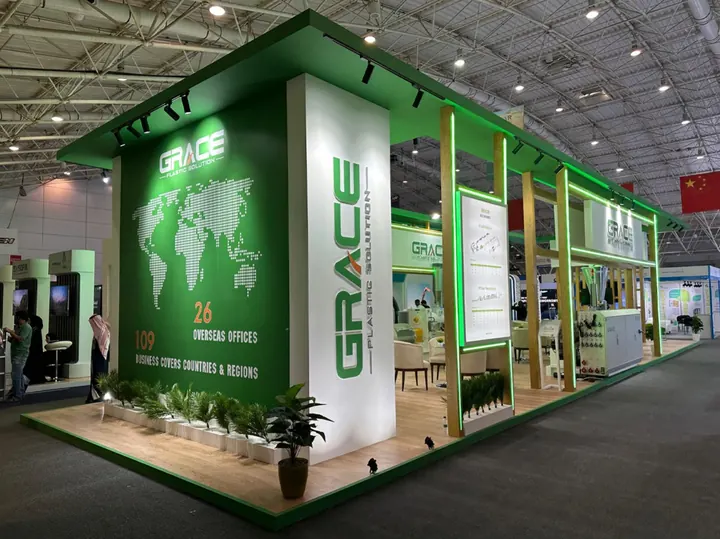
Why there is no single price
Ask ten stand builders what a stand costs and you will get ten different answers, and most of them will be fair. A stand is a custom project: it is designed for one plot, one brand and one set of goals, then fabricated, transported, installed and removed within dates the organiser sets. The useful question is not “what does a stand cost?” but “which choices move the price, and which of them matter to me?”
The sections below cover those choices in roughly the order they affect the budget. Once you know them, you can decide where to spend and where to keep things simple.
The main cost drivers
- Size and open sides: a bigger plot needs more structure, flooring and graphics. A corner, peninsula or island stand has more open faces to finish and fewer shared walls than a row stand. See exhibition stand types for how each shape works.
- Build type: a fully custom stand in timber and finishes, an upgraded modular system with custom graphics, or a double-deck stand with an upper floor. Custom and double-deck builds take more design, engineering and workshop time.
- Materials and finishes: paint, laminate, tension fabric, acrylic, raised lettering, glass and metal all differ in cost and in how long they take to make.
- Graphics and print: the number and size of printed panels, backlit fabric, wall wraps and logos. More on this on our printing and acrylic page.
- Lighting, LED screens and AV: general lighting is expected, but LED walls, large screens, sound and interactive content add equipment, content and technician time. See lighting, sound and LED screens.
- Furniture and storage: reception counters, display shelving, meeting rooms, lockable stores and custom-made pieces versus rented standard furniture.
- Flooring: raised flooring hides cables and levels the hall floor; carpet, vinyl and parquet finishes vary in cost.
- Design and approvals: 3D design rounds, technical drawings and any structural calculations the organiser asks for, especially for double-deck or tall structures.
- Transport, installation and breakdown: trucks, crew, lifting equipment, and the time allowed by the organiser for build-up and breakdown.
- Show city and venue logistics: distance from the workshop, venue access rules, working hours and any required contractors on site.
- Timing: a late start means rush fabrication, overtime and fewer material choices.
- Reuse: elements designed to be stored and rebuilt can spread the cost across several shows.
What is usually not in the stand builder’s price
A stand builder quotes for the stand itself. Several costs of exhibiting are usually paid to the organiser or other suppliers, and it helps to budget for them separately from the start:
- Space rental, paid to the organiser when you book your plot.
- Power, water, compressed air and internet connections, which are usually ordered through the organiser by their deadline.
- Exhibitor and contractor badges, and any registration fees.
- Hospitality: catering, coffee service and hostesses or promoters.
- Insurance for the stand, exhibits and public liability, which the organiser may require.
- Shipping of your own products and exhibits, and their storage.
- Travel and accommodation for your staff.
Exact requirements change from show to show, so check the organiser’s exhibitor manual for what is mandatory, what is ordered through them and the deadlines that apply.
How to compare quotes like-for-like
Quotes often look far apart because they do not describe the same stand. Before you compare totals, line them up on the same points:
- Is the design the same size, height and number of open sides?
- Is it custom-built, modular or a mix? Who owns the elements after the show?
- Which materials and finishes are specified for walls, counters and flooring?
- How many screens, of what size, and is the content included?
- Is furniture custom-made or rented, and how many pieces?
- Are graphics, lighting, installation, breakdown and transport all included?
- Are approval drawings and on-site support during the show covered?
- What is excluded, and what happens if the brief changes after sign-off?
A clear, itemised quote is easier to adjust: you can drop or swap single items instead of starting again.
Practical ways to save
- Start early: booking design and fabrication slots in good time avoids rush charges and keeps more material options open. Our exhibition checklist shows what to do and when.
- Design for reuse: counters, light boxes, frames and furniture that can be stored and rebuilt bring down the cost of later shows.
- Use a modular structure with custom graphics where a fully custom build is not needed.
- Limit custom materials to what visitors see and touch most, such as the logo wall and the reception counter.
- Put the budget into one strong focal point rather than many small features.
- Keep the brief stable after sign-off; late changes are among the most expensive items on any project.
- Plan the year: if you exhibit several times, tell your builder so the design can work across plot sizes.
Getting an accurate quote
The fastest route to a reliable number is a clear brief: show name and dates, plot size and open sides, what the stand must hold, your brand assets and a rough budget if you have one. You can sketch your stand in 3D on our home page and attach it to your request, or book a consultation call to talk it through.
We design and build exhibition stands for shows across the Kingdom, including Riyadh, and send an itemised quote once we have your plot and brief. If you are still choosing which shows to attend, the upcoming shows calendar lets you set email alerts for your sector.